Reclaiming the Witch: Feminism, Media, and Cultural Resistance
In Western culture, portrayals of witches often reflect contemporary societal views and expectations of women, and witchcraft has been adopted by women as a subtle form of rebellion against these expectations.
The early feminist novel 'Lolly Willowes' (1926) follows a middle-aged spinster who moves to the countryside and embraces witchcraft, symbolising a bold act of autonomy. Unique for its female perspective, it contrasts with male depictions of witches as monstrous figures. In popular culture, witches became associated with evil deeds, leading to a perception of them as repulsive rather than reverent.
By the 1960s, television found a way to domesticate the witch. In the show ‘Bewitched’, the character Samantha uses her magic within the confines of suburban life. She is portrayed as beautiful and pristine, and while her powers are amusing and often backfire, they never undermine the institution of marriage. In this version, the witch’s power remains under male control. However the show can also be viewed as subtle critique of the expectations placed on women in mid-20th century suburban America.
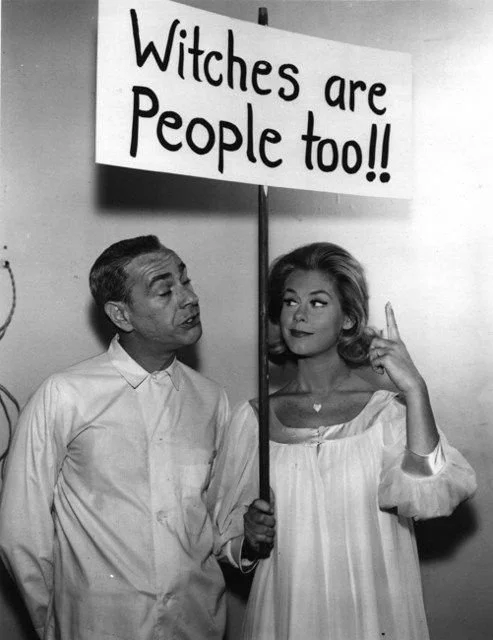
Samantha in Bewitched, played by Elizabeth Montgomery
In the late 1960s and 1970s, practices like tarot and astrology became associated with countercultures that rejected mainstream norms, offering alternative systems of knowledge that opposed dominant authority. While the witch emerged as a dual symbol, reflecting anxieties surrounding female puberty and the hypersexualisation of women in a male-dominated society. On the big screen, witches were often portrayed as minions to a male counterpart. Representations of women in sexploitation media reinforced the dichotomy of the Madonna-Whore complex. Occultist movements used women's bodies as tools to gain attention through shock value.
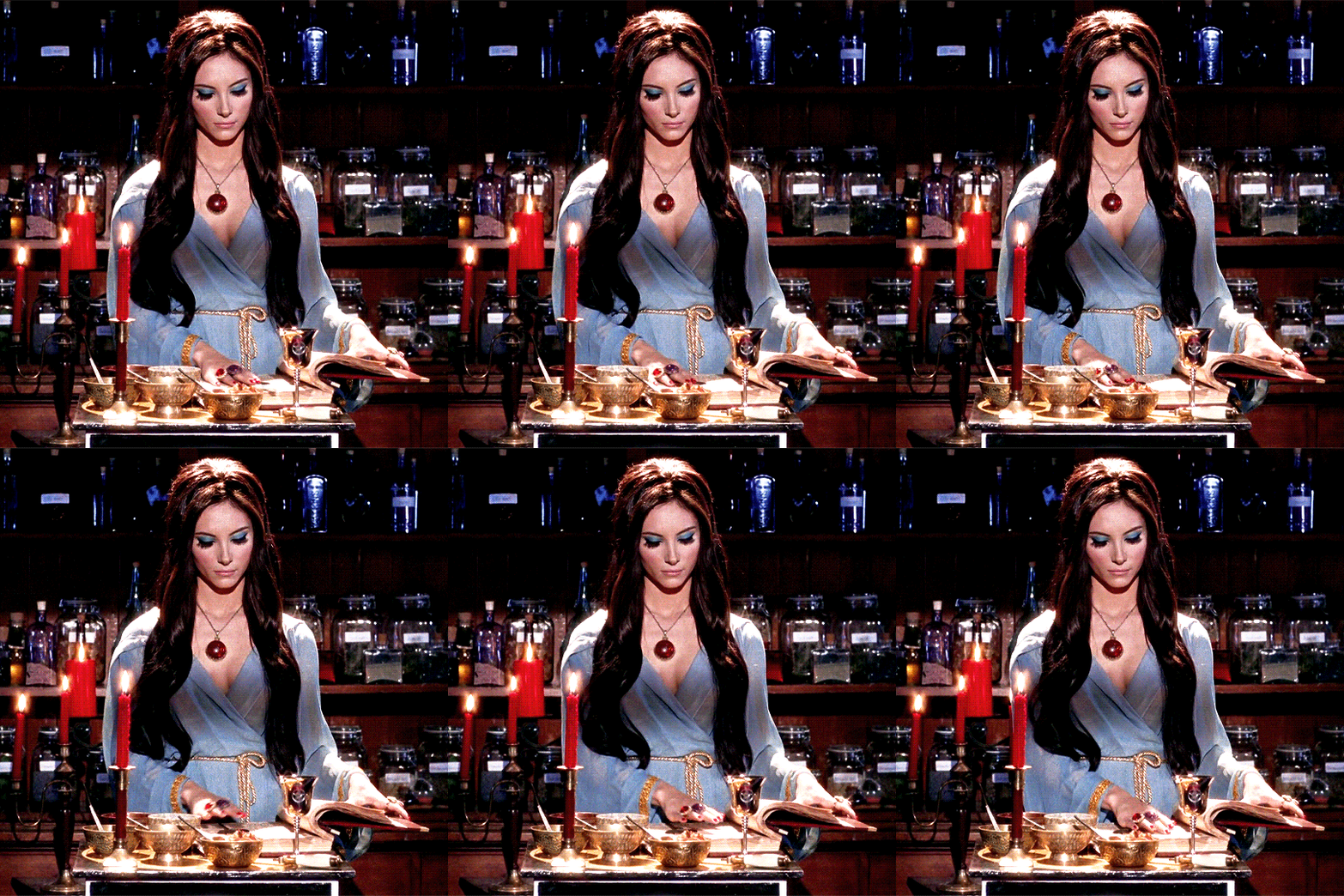
The film "The Love Witch," directed by Anna Biller in 2016, explores themes of sexploitation and examines the aesthetics and cultural contexts of 1960s cinema.
However, the feminist movements of this era, such as W.I.T.C.H., reclaimed the witch as a symbol of resistance and empowerment. They challenged patriarchal fears about women's growing social and political influence and connected their struggles to broader movements, including those advocating for LGBTQIA rights, the anti-war movement, the Black liberation movement, and the treatment of immigrants.
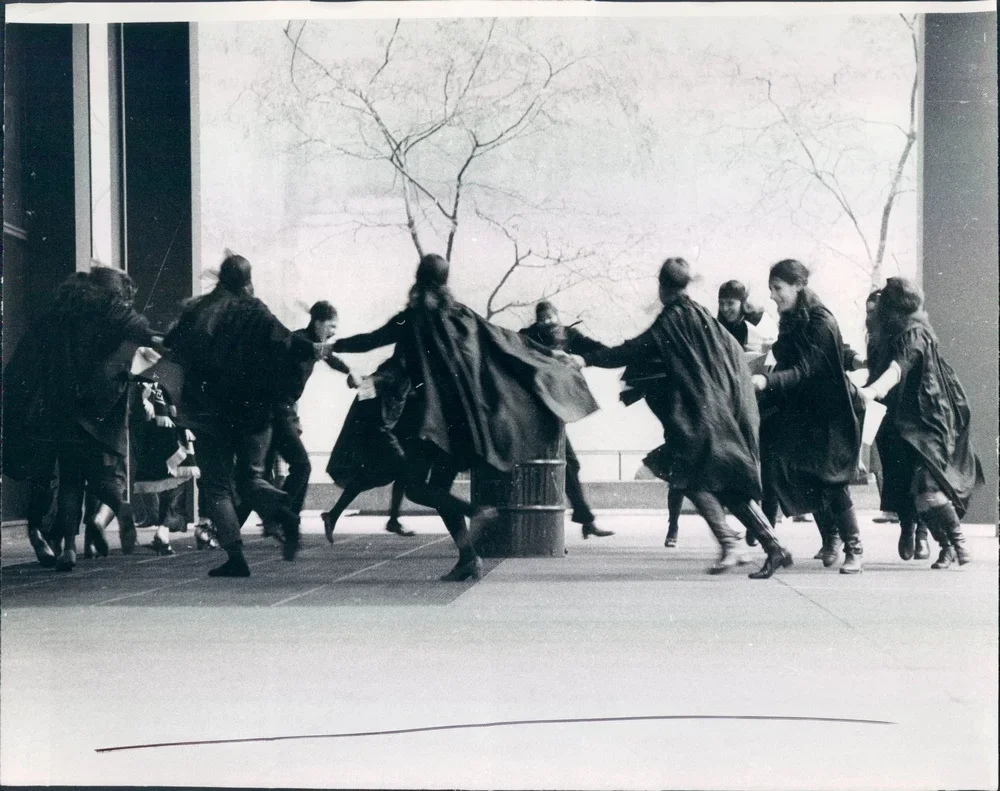
W.I.T.C.H declared that any woman could be a witch if she declared herself to be one.
My collection, Coven, draws inspiration from the occult fashion that emerged in the late 1960s as a nod to the political movements that pushed for societal change. This style, characterised by psychedelic prints, medieval elements, and Gothic Victorian revival, reflects a broader cultural shift in which fashion serves as a means to assert autonomy over individual identity. Crafting how you wish to be perceived by the world can be a powerful act of self-expression and defiance.